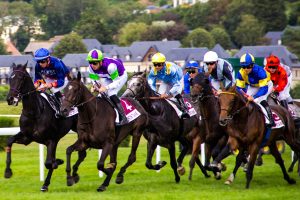
Joseph O’Brien left Royal Ascot with five winners, one short of his father Aidan, and the bare number only tells part of the story.
The younger O’Brien has been building this kind of Flat depth for some time, but the royal meeting gave it a sharper public edge. A stable once discussed chiefly through the prism of opportunism, versatility and international raids now looks increasingly like one that can return to the biggest British weeks with several different types of horse and expect to land serious blows.
Aidan O’Brien still took the meeting’s leading trainer prize for the 14th time, a familiar Ballydoyle measure of command, but Joseph’s five-winner week was much more than a family subplot. It was a statement about range, recruitment and momentum at a point in the season when the best three-year-olds and older horses are beginning to draw their summer maps.
Ascot week showed the depth of the team
The significance was not simply that Joseph O’Brien won at Royal Ascot. He has done that before, and his record in major races across both codes has long since moved beyond novelty. What stood out was how broad the challenge became across the meeting.
ReadHorseRacing had already noted the scale of the Ballydoyle landmark when Scandinavia gave Aidan O’Brien his 100th Royal Ascot winner, but the same week also underlined how quickly Joseph’s own operation is maturing on the Flat. He was not relying on one headline horse to carry the argument. He was repeatedly present, repeatedly competitive and repeatedly converting chances.
That matters because Royal Ascot is unforgiving. Strong yards can leave with a long list of near-misses and still feel they have run well. To win five there means the horses are placed right, the team is travelling right, and the stable is finding the correct balance between ambition and opportunity.
WATCH: Joseph O’Brien’s Limestone Winning The Queen’s Vase at Royal Ascot in 2026
Thundering On keeps the summer interesting
The wider context is sharpened by Thundering On, O’Brien’s hugely impressive Oaks winner, who is already being discussed for a possible quick return in the Pretty Polly Stakes at the Curragh. Racing TV reported that the Frankel filly could be considered for Saturday’s Group One, which would be an assertive move so soon after Epsom.
That would not be a token entry if she lines up. Thundering On was not merely a Classic winner at Epsom; she won like a filly with the pace to put a race to bed and the constitution to make connections think boldly. Her next step was already a major thread after the Oaks, when O’Brien set out the early options for Thundering On.
The Pretty Polly would ask a different question, over ten furlongs against older fillies and mares rather than her own Classic generation. Yet that is precisely why it is interesting. O’Brien is not short of evidence that his best Flat horses are thriving, and a stable in that rhythm can afford to be a little brave.
The family battle was real, but the lesson was wider
There was an obvious narrative in Aidan and Joseph finishing first and second in the Royal Ascot trainers’ table, and it was impossible to ignore as the meeting moved into its final day. Aidan’s finishing strength, capped by another major week with Ryan Moore, kept him in front, while Almeraq’s Jubilee Stakes thriller gave the final afternoon the kind of Group One drama Royal Ascot always seems to find.
But Joseph’s week should not be reduced to a chase he narrowly lost. The more important point is that he made the chase credible. That is not easy against a trainer who has turned Royal Ascot into one of his most reliable annual showcases.
For British and Irish Flat racing, the consequence is a more crowded top table. O’Brien already had the Classic filly, the international record and the mixed-code imagination. Royal Ascot added something else: proof that the current Flat squad can win often, in public, under the most searching conditions.
The summer will decide how far that momentum carries. For now, Joseph O’Brien has changed the tone of the conversation around his stable, and the next time one of his better horses is aimed at a major prize, it will be very hard to treat it as anything other than a serious warning.