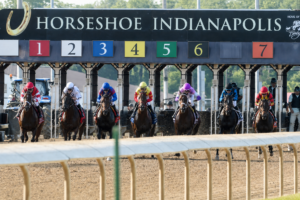
A racing punter who has spent twenty years with a British bookmaker knows the furniture without having to think about it.
Eight runners means three places at a fifth of the odds. Sixteen in a handicap means four places at a quarter. A favourite gets withdrawn at the start and there will be a deduction, and the size of it depends on what price the missing horse was. If the horse drifts after the bet was struck, best odds guaranteed picks up the difference.
None of that is written down anywhere the punter looks. It has simply been absorbed over two decades of Saturday afternoons.
Then the same punter opens an account at a crypto sportsbook, backs something each way in a twenty-runner handicap at Ascot, watches it run fourth, and finds nothing in the account. Not because anybody has done anything wrong. Because that book pays three places, not four, and it says so in a rules page nobody reads until the money comes back wrong.
Racing is the sport where this happens most, and it is worth understanding why before the first bet rather than after it.
Racing carries more rules than any other betting sport
Football has a handful of settlement questions. Extra time, own goals, whether a market counts ninety minutes. Racing has an entire architecture of conventions, most of them built up over decades by the British and Irish industry, and almost all of them invisible until something goes slightly wrong.
Place terms. Starting prices. Withdrawals and deductions. Dead heats. Ante-post rules. Whether a bet stands if a horse is a non-runner. Whether the price taken in the morning holds if the horse drifts by the off.
A British bookmaker applies these in a way the domestic punter takes for granted. An international sportsbook, crypto-funded or otherwise, is not obliged to do any of it the same way, and frequently does not. That is not a scandal. It is a different market with different customs. But somebody arriving from a Coral shop needs to know which of their assumptions travel and which do not.
Place terms are the one that costs the most
The British each-way ladder is standard enough that most punters think it is a law of nature.
Two to four runners is win only. Five to seven runners pays two places at a quarter of the odds. Eight or more in a non-handicap pays three places at a fifth. Twelve to fifteen runners in a handicap pays three places at a quarter. Sixteen or more in a handicap pays four places at a quarter.
That ladder is a convention, not a rule of the universe, and it is the single most important thing to check at any new sportsbook. The difference between three places and four in a big handicap is enormous. It is the difference between a fourth-placed horse returning a decent slice of the stake and returning nothing at all, and in a twenty-runner Saturday handicap, fourth is exactly where a lot of each-way money finishes.
Plenty of international books apply a simpler structure across the board, often three places on anything with a large field, with a place fraction that does not shift between handicaps and non-handicaps. Others mirror the British terms precisely. A few offer enhanced terms on selected races, which is genuinely good value when it appears.
None of that can be guessed. It takes two minutes on the rules page and it settles the question permanently.
The price taken and the price paid are not always the same thing
The second assumption that does not always travel concerns starting prices.
British racing has an SP, returned for every race, and a domestic punter can either take a board price in the morning or take SP and accept whatever the market returns. On top of that sits best odds guaranteed, the concession where a winning bet taken at an early price gets paid at SP if the SP is bigger. Most UK bookmakers switch it on at eight or nine in the morning on the day of the race.
Best odds guaranteed is worth real money over a season, particularly to anyone who likes taking a price early on a horse that then drifts. It is also a specifically British and Irish bookmaker concession, and it is not a standard feature of international sportsbooks.
Many crypto books price racing on fixed odds only. The price taken is the price paid, whether the horse shortens or drifts. That is perfectly workable, and for a punter who backs horses that shorten it is arguably better, since a fixed price locks in the value before the money arrives. But it changes the approach. Taking an early price without best odds guaranteed is a decision to accept the drift risk, and it should be a deliberate one.
The related question is whether the book offers SP at all. Some do not, which matters for anybody who habitually leaves the price to the market.
Rule 4, and the most common complaint in racing betting
Then there is the deduction that catches everybody at least once.
When a horse is withdrawn before the off, the remaining runners all become more likely to win, so the prices already struck are too generous. The industry answer is Tattersalls Rule 4, which takes a deduction from winnings according to the price of the horse that came out.
The scale runs roughly as follows. A withdrawn horse at 1/9 or shorter costs 90p in the pound. Between 1/4 and 1/5, 80p. Around 2/5 to 1/3, 70p. In the region of 4/5 to 4/6, 55p. The deductions taper as the withdrawn horse gets bigger, and above 14/1 there is generally no deduction at all.
That is why a punter who backed a 6/1 winner sometimes gets paid out at something closer to 4/1 and assumes an error has been made. No error. The favourite refused to enter the stalls and the deduction did the rest.
International books handle this variously. Some apply the Tattersalls scale exactly. Some apply their own version. Some void bets entirely in certain circumstances. The scale matters, because a heavy deduction on a big-priced winner is the sort of thing that produces a genuinely angry evening if it arrives unannounced.
Ante-post, and the concession worth waiting for
The last piece is the one that stings most, because the money can vanish before the race is even run.
An ante-post bet is struck weeks or months in advance, at a price far bigger than anything available on the day. The trade-off is brutal in its simplicity: if the horse does not run, the stake is gone. No refund, no consolation. The horse got injured in February, the ground came up wrong, the trainer went elsewhere, and the bet died without ever reaching a starting stall.
The concession that softens this is non-runner no bet, where the book refunds stakes on horses that do not line up. It typically appears on the big championship races as the meeting approaches, and it is one of the more valuable things a bookmaker offers. Prices are usually shorter once it applies, which is the honest cost of the protection, and where non-runner no bet is in force Rule 4 generally does not come into it.
For anyone betting the winter build-up towards Cheltenham and Aintree, the question of whether a book offers this concession, and from what date, changes the entire calculation of when to strike.
Where crypto books genuinely have the advantage
None of the above is an argument against them, and there are two areas where they are frequently better than the domestic alternative.
The first is international coverage. Racing is a twenty-four hour sport. There is racing in Australia and Hong Kong while Britain sleeps, American cards running through the British night, French and Japanese meetings that domestic books cover thinly if at all. International sportsbooks tend to price all of it, and for a racing enthusiast who does not want the day to end at the last at Wolverhampton, that breadth is a genuine draw.
The second is speed. Racing is the most time-sensitive betting sport there is. Non-runners are declared late, markets move hard in the final ten minutes before the off, and a punter who needs to fund an account in that window has no time for a card payment to be reviewed. Digital currency deposits clear quickly and at any hour, which suits a sport where the interesting moment often arrives with four minutes to post.
Anyone opening an account can start from a decent position too. New customers at Rainbet.com using the code CRYPTOBETS can pick up deposit bonuses worth up to $2,100 along with 60 free spins, with the sportsbook offer building across early deposits rather than landing all at once. That suits racing particularly well, since a season is made of small regular bets rather than one big punt.
For working out which crypto sportsbooks handle racing properly, and which treat it as an afterthought behind the football, CryptoBets.com compares coverage, terms and payment options in one place. On a sport this rule-heavy, that comparison is worth more than it is in any other market.
Two minutes now, or a bad afternoon later
The whole of this comes down to a small piece of housekeeping that almost nobody does.
Before the first racing bet at any new sportsbook, find the racing rules page and check four things. How many places each-way pays and at what fraction. Whether starting price is offered and whether early prices are guaranteed. How withdrawals and deductions are handled. Whether ante-post bets carry any non-runner protection.
Four answers, two minutes, and every settlement for the rest of the season makes sense.
Get that done and the rest is what it has always been. The going, the draw, a horse that only ever runs its race on soft ground, and the particular pleasure of watching one travel sweetly three out with the whole thing still to be decided. Keep the stakes at a level that leaves that enjoyable whatever happens, and let the racing do the rest.